
Master Kinetic Typography Motion Parameters Inside Chrome Browser Canva
A major brand executive left a comment on my short-form video saying the layout looked like a broken PowerPoint presentation from a middle school science fair. I was genuinely sitting in front of my balcony eating lunch, scrolling through the notifications on my latest video upload, expecting to see praise for my editing. Instead, that public critique pinned to the top of my comment section made my stomach drop into my shoes. I opened the video file on my phone and looked at it with fresh eyes. It was a complete disaster.
Every single time a new tip appeared on screen, the text block just popped into existence with a jarring, mechanical stiffness. The letters didn’t flow, they didn’t slide, and they had absolutely no rhythm. It looked incredibly cheap, rigid, and amateurish. Viewers were dropping off within the first three seconds because the visual transitions felt like a clunky desktop office tool rather than an engaging social media post. That wake-up call forced me to sit down at my desk and run countless timeline experiments until I finally perfected how I create smooth, animated text for my social media clips.
If you are still uploading short-form videos with flat, motionless captions or default blinking letters, you are actively burning your view duration metrics. In a fast-paced feed environment, static text looks invisible, and rough, mechanical transitions cause immediate visual friction. Let’s talk about how to keep your audience completely locked into your content using how I create smooth, animated text for my social media clips directly inside your Chrome browser canvas so your video headers move like a premium studio production. Also read My Favorite Serif and Sans-Serif Mixes for Readable E-books.
Configuring advanced text entry speed and motion physics parameters within the video timeline engine in your browser.
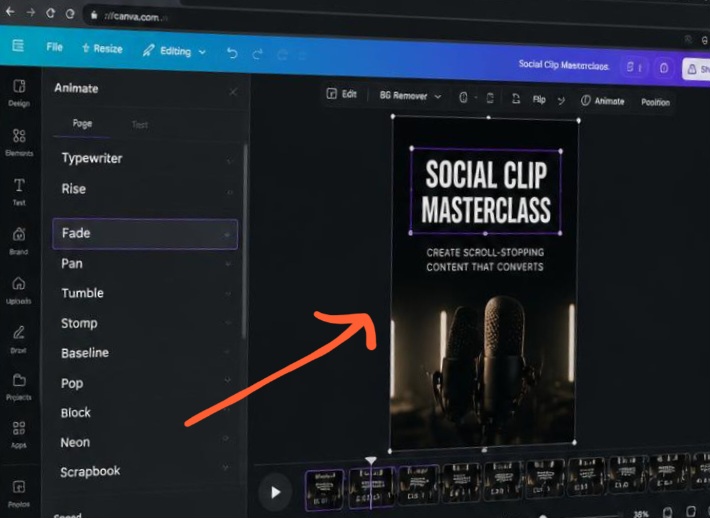
The arrangement demonstrates how applying subtle entry paths to your caption rows completely prevents visual clutter from disrupting the viewer’s gaze. It offers clear proof that premium short-form asset design relies heavily on enforcing strict, timed timeline tracking models rather than relying on automated random movements.
I Thought Text Animation Was A Simple Process
Let me open up about the frustrating video timeline struggle I had to overcome before my view counts started growing. When I first started editing short clips for my channels, I assumed that text animation was a simple automated process where you just hit a button and let the software handle the movement. I would apply loud, chaotic bouncing filters to every single word, thinking it looked high-energy and creative.
I produced a ten-part video series for an important marketing campaign. I set all my main textual overlays to a heavy zoom-in animation path. On my high-end editing computer monitor, it felt punchy. But when the final videos went live on mobile apps, the text transitions looked completely unreadable.
The letters expanded so violently that they caused an annoying visual strobe effect against the video background. Viewers couldn’t read the words before they snapped away, and my watch time stats tanked. It was a massive learning experience for me. Captions on a screen shouldn’t distract the viewer from the video message; they should glide alongside the audio track like a natural musical rhythm. True professional motion design requires a strict balance between kinetic speed and physical reading legibility.
Analyzing text transition speed contrast values inside Chrome to protect short-form video clips from choppy layout movement errors.
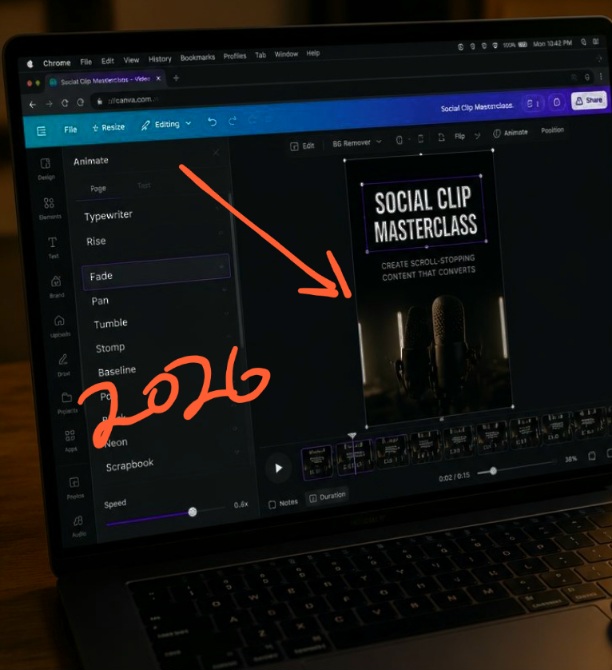
The 2-Click Kinetic Animation Sequence
Let’s skip the complicated video editing jargon and look at the exact interface configuration that builds fluid movement vectors into your captions in seconds. Most creators waste hours cutting up individual video frames by hand just to make text appear word-by-word. You are throwing away your production hours if you are doing that.
All you need to do is click once on the specific text block you want to bring to life. Look up at the primary properties panel running across the top of your browser window and tap the Animate button. A comprehensive motion styles panel will instantly fly open on the left edge of your Chrome screen.
Instead of selecting the erratic, bouncing party effects, look at the elegant structural options. Click on the Typewriter or Rise setting. The moment you select it, look at the sub-menu properties that pop up directly underneath the animation icon block. Change the execution parameter from “Both” to On Enter. This tiny adjustment ensures your text flows smoothly onto the screen when the video scene starts, but stays perfectly solid and readable when the scene cuts away, preventing any distracting visual glitches.
My Personal View on the Caption Pop Craze
Many modern social media gurus claim that the only way to hold a viewer’s attention in 2026 is to use flashing, multi-colored word-by-word captions that jump around the screen every millisecond. That style is a massive mistake if you want your brand to look professional and authoritative.
When you force your audience to look at a chaotic explosion of neon text blinking across their screens, their brains tire out rapidly because their eyes are constantly chasing the words rather than absorbing your actual message.
To break away from that exhausting pattern and master how I create smooth, animated text for my social media clips, you must use motion as a subtle accent tool rather than a loud gimmick. Use a clean, fluid Fade or Slide motion path to introduce your main talking points, and let the typography sit elegantly in place while you speak. This approach keeps your content looking incredibly high-end, maintains a premium look, and ensures your viewers focus on your value rather than your editing tricks.
Taming Motion Speed Physics on the Timeline Grid
While the software provides excellent automated movement paths, you must act as the final director to ensure the text timing coordinates match your actual vocal delivery perfectly.
- Never let a long sentence animate onto the canvas at a slow, dragging speed. You must enforce absolute structural pacing across your video track layers:
- Select your text layer and open the left-hand animation configuration column panel.
- Drag the Speed slider bar slightly to the right to accelerate the character rendering pace.
- Tap the video timeline marker at the bottom of your Chrome window, right-click the text box tracking line, select Show Timing, and shrink the boundary handles to align the text box exactly with your voice track audio bars.
This takes less than two seconds to set up, but it guarantees that your written words pop onto the screen at the exact millisecond your mouth speaks them, creating a unified viewing experience.
Fatal Motion Layout Flashes to Eliminate
Applying different animation filters to every single caption block: If your first title bounces, your second title spins, and your third title fades, your video will look incredibly disorganized and cheap. Pick one clean motion profile style and maintain it across your entire video project file to ensure consistent brand mechanics.
Placing moving text zones directly over busy background areas: Animated characters are hard to track when they slide across a chaotic, colorful video backdrop. Always place a subtle, dark rectangular shape container behind your text blocks, drop the transparency parameter to 40%, and apply the lock position feature to keep your text fully visible against any camera movement.
Ignoring the platform safe zone crop lines: If your text slides too close to the right edge or the bottom border of your video frame, the social media app interface icons (like the like button or profile tag) will block your words completely. Keep all your animated typography boxes perfectly centered within a safe 1080×1350 middle grid boundary box.
Frequently Asked Questions
Why does my text animation look laggy and choppy inside my browser preview window?
This is a standard cloud rendering delay caused by temporary internet connection dips or heavy browser cache loads. Don’t worry about the preview lag; once you download the final video file as an MP4 stream, the underlying system code compiles the motion vectors flawlessly at a crisp 60 frames per second.
Can I apply a smooth text animation path to a whole group of shapes together?
Yes, this is an excellent strategy for building complex lower-third graphics or title cards. Select your vector accent line and your heading text box at the exact same time, hit the Group option on your toolbar, and then open the Animate panel. The software will move the entire cluster together as one cohesive asset.
How do I instantly duplicate an animation timing block across multiple video clips?
Once you configure the perfect speed and movement settings on your first text layer, right-click the text frame border on your canvas page and select Copy. Move to your next video scene page, right-click the background space, and select Paste. The system will drop an identical text block with your custom speed properties completely intact.
Moving with Intentional Direction
Using how I create smooth, animated text for my social media clips is about moving away from sloppy, automated editing patterns and using clean motion physics to elevate your presentation values. Your digital brand authority depends entirely on how professionally you present your insights across highly competitive feeds. When you balance quick, responsive text rendering with crisp typography positioning, your video assets instantly cut through the online noise and command respect.
Open up your most complex short-form video folders inside your project library database. Launch your motion properties tab panels, strip away the frantic bouncing filters, lock in these clean, timed animation settings, and transform your flat presentation graphics into highly engaging, cinematic video assets that viewers watch until the very last second.
Sources and Citations
Canva Official Video Design Manual for timeline and keyframe transition tools: Canva Help: Animate Text and Elements in Video. How to Create Animated Text for Social Media Clips.
Adobe Motion Design portal on human cognitive processing of kinetic typography frames: Adobe Research: Principles of Readability in Kinetic Video Text.
W3C Digital Media Accessibility Standards for flashing text and movement safety metrics: W3C Guidelines: Motion and Animation Readability Scales.

Udeichi Miracle Chinaza is a digital creator and graphic designer who specializes in creating clean, visual content. Passionate about making design accessible to everyone. I share practical Canva tutorials, layout tips, and creative shortcuts to help beginners and small businesses build stunning graphics with ease.